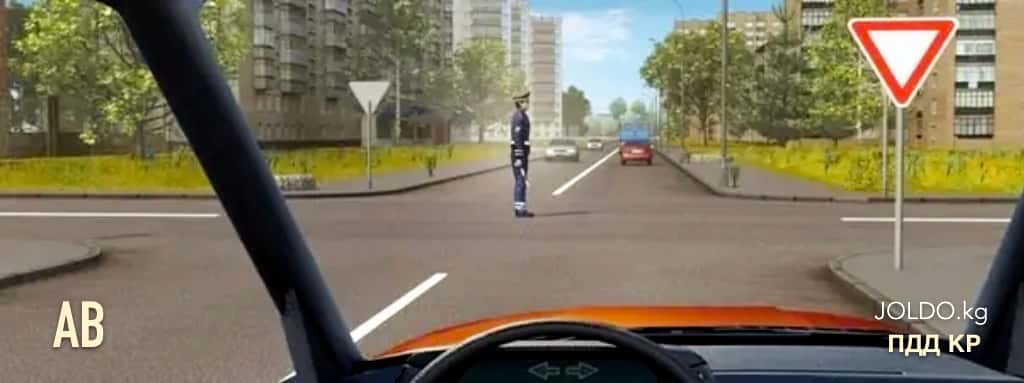
Traffic officer signals mean the following:
- Arms extended to the sides or lowered:
- From the left and right sides: Trams may drive straight. Other vehicles may drive straight and turn right. Pedestrians may cross the roadway;
- From the front (chest) and back: All vehicles and pedestrians must stop.
Right arm extended forward:
- From the left side: Trams may turn left. Other vehicles may drive in all directions;
- From the front (chest): All vehicles may only turn right;
- From the right side and back: All vehicles must stop;
- Pedestrians may cross the roadway behind the traffic officer's back.
Arm raised straight up:
- All vehicles and pedestrians must stop and not move in any direction. This does not apply to cases described in paragraph 6.14 of the Traffic rules.
- The traffic officer may use other hand signals that drivers and pedestrians can understand.
To make signals easier to see, the traffic officer may use a baton or a disk with a red reflector.
Drivers and pedestrians must follow the signals and orders of a traffic officer. They must do this even if the officer's orders go against traffic lights, traffic signs, or pavement markings.