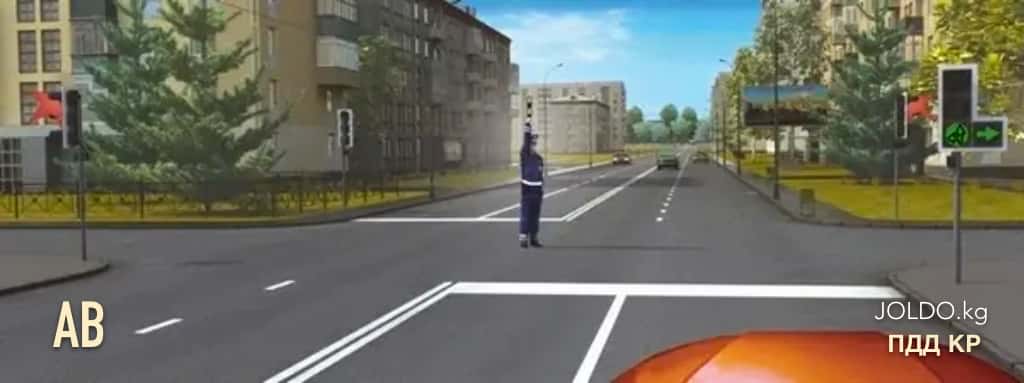
Сигналы регулировщика имеют следующие значения:
Руки вытянуты в стороны или опущены:
- со стороны левого и правого бока разрешено движение трамваю прямо, безрельсовым транспортным средствам прямо и направо, пешеходам разрешено переходить проезжую часть;
- со стороны груди и спины движение всех транспортных средств и пешеходов запрещено.
Правая рука вытянута вперед:
- со стороны левого бока разрешено движение трамваю налево, безрельсовым транспортным средствам во всех направлениях;
- со стороны груди всем транспортным средствам разрешено движение только направо;
- со стороны правого бока и спины движение всех транспортных средств запрещено;
- пешеходам разрешено переходить проезжую часть за спиной регулировщика.
Рука поднята вверх:
- движение всех транспортных средств и пешеходов запрещено во всех направлениях, кроме случаев, предусмотренных пунктом 6.14 Правил.
Регулировщик может подавать жестами рук и другие сигналы, понятные водителям и пешеходам.
Для лучшей видимости сигналов регулировщик может применять жезл или диск с красным сигналом (световозвращателем).
При запрещающем сигнале светофора (кроме реверсивного) или регулировщика водители должны остановиться перед стоп-линией (знаком 6.16), а при ее отсутствии:
- на перекрестке - перед пересекаемой проезжей частью (с учетом пункта 13.7 Правил), не создавая помех пешеходам;
- перед железнодорожным переездом - в соответствии с пунктом 15.4 Правил;
- в других местах - перед светофором или регулировщиком, не создавая помех транспортным средствам и пешеходам, движение которых разрешено.
Водители и пешеходы должны выполнять требования сигналов и распоряжения регулировщика, даже если они противоречат сигналам светофора, требованиям дорожных знаков или разметки.